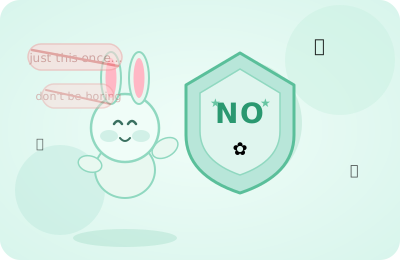
The Power of "No"
Standing your ground without losing your friends
What peer pressure actually looks like
Movies show peer pressure as someone shoving a vape in your face and saying, “Try it!” In real life, it is almost never that loud. Most peer pressure sounds like:
- “Come on, don’t be such a baby.”
- “Everyone is doing it.”
- “You’re being weird, just do it.”
- (Silence + a look + nobody includes you in the next thing.)
The most powerful pressure isn’t even spoken — it’s the fear of being left out. Your brain at this age is wired to care about belonging more than at any other time in your life. That is why even smart, kind kids sometimes do things they later regret. It is not a flaw in you. It is biology.
Knowing pressure is normal does not make you weak. It makes you ready.
The two kinds of “yes”
Every time you agree to something, ask yourself:
- Yes-because-I-want-to (“This sounds fun and lines up with who I am.”)
- Yes-because-I’m-scared-to-say-no (“If I say no, they’ll think I’m boring/uncool/a snitch.”)
The second kind always feels heavy afterward. That heavy feeling is your gut telling you that you betrayed yourself a little. The good news: you can train yourself to notice the difference before you answer.
Tonight, think of the last three times you said yes to a friend. For each one, ask: which kind of yes was that? No judgement — just notice. Self-awareness is step one.
Why “no” feels so hard
Three reasons saying no is hard at your age:
- You don’t want to embarrass them. You feel responsible for the awkward silence after.
- You assume they’ll judge you forever. Your brain rewinds the moment for days.
- You don’t have words ready. You freeze, then say yes by default.
The trick is fixing #3. With words ready, the other two get smaller.
A toolkit of ready-made “no”s
Pick a few that sound like you and practice them out loud. Yes — actually out loud, in your room, even if it feels silly. Words your mouth has spoken before come out way faster under pressure.
The Soft No
“Nah, I’m good.” → then change the subject. “Not really my thing — what else is going on this weekend?” “Pass — but tell me how it goes.”
The Soft No works for most low-stakes pressure (skipping class for boba, gossiping about someone). It doesn’t preach. It just declines and moves on.
The Blame-It-On-Me No
“I can’t, my parents would absolutely kill me.” “I’d love to but I have a thing tomorrow morning.” “My coach has me on a no-junk-food week, sorry.”
Sometimes the easiest exit is to make it about a rule outside the friendship. Real friends won’t push past a “my parents will literally find out.”
The Honest No
“I just don’t want to. It’s not my thing.” “I’d feel weird about that — I’m gonna sit this one out.” “Not into it, but no judgement to you.”
Use this with people who actually respect you. It is the most powerful kind, because it teaches them who you are.
The Delay No
“Let me think about it and get back to you.” “I’ll let you know later.”
You don’t owe anyone an instant answer. Buy time. Make the decision when your heart isn’t pounding.
The Exit No
For dangerous situations (drinking, drugs, being somewhere you shouldn’t be):
- Have a code word with a parent. Text them one word — agreed in advance — and they call with a fake “emergency” to come get you. No questions asked. No social cost.
- Have a friend buddy. Agree in advance to leave together no matter what.
The rule of “two strikes”
A real friend will accept your no the first time, maybe poke once, then drop it. If someone pushes you a third time after a clear no, that is information. Not about whether you should give in — about whether they are actually a friend. Real friendship doesn’t require you to override yourself.
“No” is a complete sentence. You do not owe anyone a long explanation for caring about your own body, mind, time, or rules.
Building “no” muscle in low-stakes moments
Saying no to your sister wanting your last fry is practice for saying no to bigger things later. Use small moments on purpose:
- Decline an extra serving you don’t want.
- Say “I’d rather not” to a small favor when you’re tired.
- Pick the movie you actually want to watch sometimes.
Each tiny no makes the next one a little easier.
What to do after a hard no
You said no. They reacted weird. Now what?
- Don’t over-explain. Saying “no” twelve times sounds like a “maybe.”
- Don’t apologize for your boundary. (“Sorry I’m such a buzzkill” tells your brain you did something wrong. You didn’t.)
- Reach out the next day like normal. This signals: I said no to the activity, not to you. Most awkwardness fades fast if you don’t make it weird.
When you’ve already said yes to something you regret
Welcome to being a human. You are allowed to change your mind:
- “I thought about it and actually I’m not going to.”
- “I know I said I would, but I changed my mind.”
You may take a hit for it. You will also sleep better tonight. That trade is almost always worth it.